Living in the Greater Boston area offers a unique blend of historical charm, vibrant culture, and beautiful changing seasons. However, the densely packed neighborhoods and older architecture also create a perfect environment for some unwanted guests: rodents. Whether it’s mice scurrying behind the walls of a Beacon Hill brownstone or rats lurking in the basement of a Somerville triple-decker, rodents are a year-round nuisance.
When faced with a rodent problem, many homeowners immediately head to the local hardware store to stock up on traps and bait, hoping for a quick, cheap fix. Unfortunately, do-it-yourself (DIY) pest management often leads to prolonged infestations, wasted money, and unnecessary stress. If you are trying to tackle a mouse or rat problem on your own, you might be doing more harm than good.
Here are the top DIY rodent control mistakes Boston residents should avoid, and why bringing in a professional pest control company is usually the smarter, safer choice.
Relying on the Wrong Bait
Thanks to old cartoons, there is a widespread misconception that cheese is the ultimate rodent bait. In reality, mice and rats are largely seed and nut eaters. They are far more attracted to high-calorie, sweet, or fatty foods. Using a block of cheddar might yield zero results, while a small dab of peanut butter, hazelnut spread, or even a piece of chocolate can be incredibly effective.
Furthermore, using too much bait is a common error. If you overload a snap trap with peanut butter, a clever mouse can often lick the bait clean without ever triggering the mechanism. The goal is to use a pea-sized amount so the rodent has to work for it, thereby springing the trap.
Placing Traps in the Wrong Locations
Another classic mistake is placing traps in the middle of a room or in open spaces. Rodents are naturally cautious prey animals; their survival instinct tells them to avoid open areas where they are exposed to predators. Instead, they travel along the edges of walls, behind appliances, and through dark, concealed pathways.
If you aren’t placing your traps flush against the walls, in dark corners, or directly along suspected runways (look for grease marks or droppings), your traps will likely gather dust instead of rodents. Proper placement is a science that requires a deep understanding of rodent behavior—something a professional pest control technician brings to the table.
Ignoring the Entry Points (Lack of Exclusion)
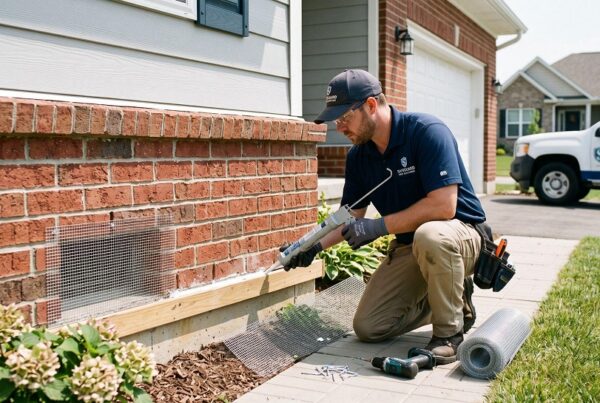
Catching a few mice might feel like a victory, but if you haven’t sealed the holes they used to get inside, your problem is far from over. This process, known in the industry as “exclusion,” is the most critical step in long-term rodent control.
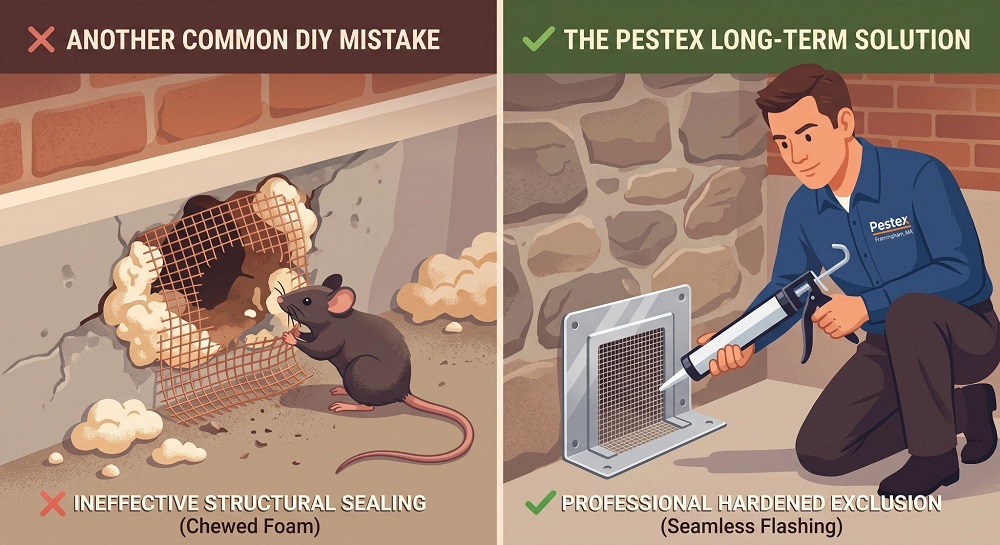
Boston’s older homes are full of cracks, crevices, and gaps. A mouse can squeeze through a hole the size of a dime, and a rat can fit through a hole the size of a quarter. Relying on traps while ignoring gaps around plumbing pipes, vents, windows, and foundations is like trying to bail water out of a sinking boat without plugging the leak. DIYers often use materials like spray foam, which rodents can easily chew right through, instead of heavy-duty materials like copper mesh or steel wool.
Underestimating the Size of the Infestation
Where there is one mouse, there are almost certainly more. Rodents breed at an astonishing rate. A single female mouse can have up to 10 litters a year, with five or six young per litter. Homeowners often set two or three traps, catch a couple of mice, and assume the infestation is resolved. Meanwhile, a nest hidden in the walls or attic is rapidly multiplying. Underestimating the sheer scale of the population is a primary reason why DIY methods fail to eliminate the entire colony.
Using Poisons Incorrectly and Unsafely
Out of desperation, many Boston residents turn to over-the-counter rodenticides (poisons). This is incredibly risky for several reasons. First, improper placement puts children and household pets at risk of accidental ingestion. Second, if a rodent consumes the poison and dies inside your walls or floorboards, you will be left with an unbearable odor that can linger for weeks, and you may have to cut through drywall to remove the carcass. Professionals use specialized, tamper-resistant bait stations and rely on safer, more effective eradication strategies.
Why You Need a Professional Pest Control Company
Rodent infestations are not just a nuisance; they pose serious health and safety risks. Rodents can carry dangerous diseases, contaminate your food, and cause severe structural damage by chewing through wires, which is a leading cause of house fires.
Instead of dealing with the frustration of ineffective DIY methods, it is always best to partner with a trusted pest control company. Professionals have the training, equipment, and experience to identify the root cause of the infestation, safely eliminate the entire population, and completely seal off your home to prevent future invasions.
Contact Us
Don’t let rodents take over your Boston area home. If you are tired of fighting a losing battle against mice and rats, it’s time to call in the experts.
Pestex, located in Framingham, MA, has been proudly serving the Greater Boston area with top-tier, reliable pest management solutions. Our team of highly trained technicians will assess your property, customize an exclusion and eradication plan, and restore your peace of mind so you don’t have to worry about what’s hiding in your walls. Contact us today to learn more!