If you live in Framingham, MA, you know that each changing season brings its own unique set of uninvited guests. When the temperatures drop in the fall, mice and rats look for warm places to nest. When the spring rains arrive, ants, spiders, and centipedes march indoors seeking dry shelter. For many homeowners, dealing with these invaders feels like an endless cycle of trapping, baiting, and spraying. You eliminate the current infestation, only for a new one to appear a few months later.
But what if you could break this cycle entirely?
Instead of treating the symptom, the most effective approach is to treat the root cause. This is where the concept of pest exclusion comes into play. Rather than simply reacting to a pest problem after it has already occurred, pest exclusion creates a permanent, physical barrier that keeps pests out of your home for good.
What is Pest Exclusion and How Does it Work?
At its core, pest exclusion is a form of integrated pest management (IPM) that focuses on modifying the structure of your home to prevent pests from gaining entry. Think of it as weatherproofing your home, but specifically designed to keep out living organisms rather than just cold air and rain.
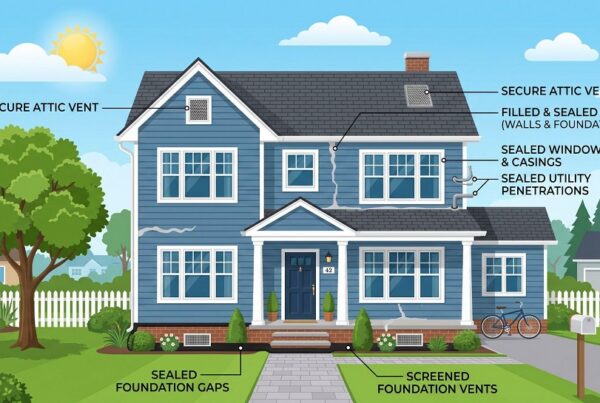
Pest exclusion works by thoroughly inspecting the building envelope—the physical separator between the conditioned and unconditioned environment of a building. Pest control experts examine the foundation, the roofline, the windows, the doors, and every space in between to identify vulnerabilities. Pests do not magically teleport into your kitchen or attic; they exploit existing cracks, crevices, gaps, and structural flaws. By systematically identifying and sealing these entry points with durable, pest-proof materials, you effectively shut the front door on unwanted guests, taking away their access to food, water, and shelter.
Common Exclusion Methods
Exclusion is not a one-size-fits-all solution; it requires a variety of specialized techniques and materials depending on the vulnerability of your home. Some of the most common and effective exclusion methods include:
- Door Sweeps and Weather Stripping: A surprising number of pests simply walk right through the front or back door. Gaps between the bottom of a door and the threshold provide easy access for mice, cockroaches, and spiders. Heavy-duty door sweeps and tightly fitted weather stripping seal these gaps completely.
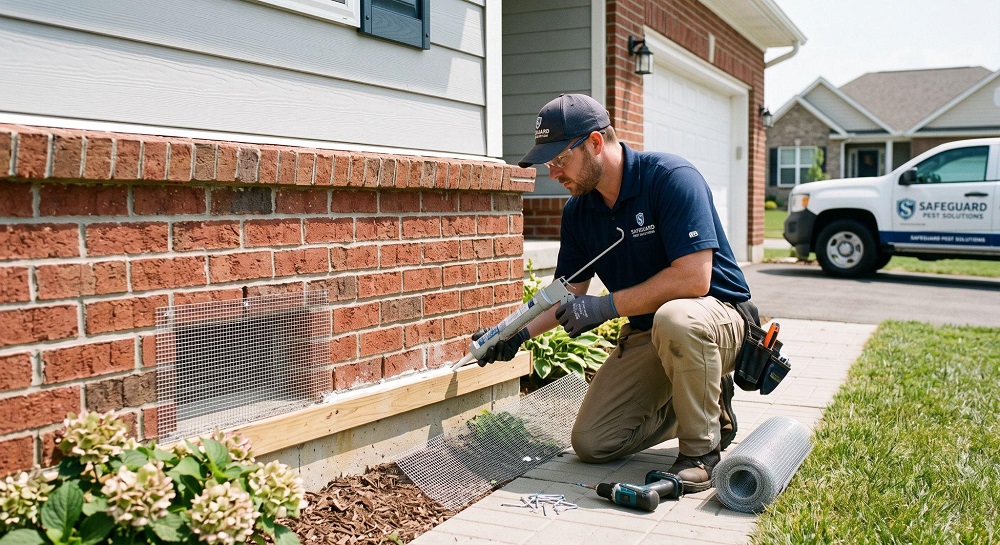
- Mesh Screens and Vent Covers: Attic vents, crawlspace vents, and chimney flues are vital for home airflow, but they are also open invitations for wildlife. Installing heavy-gauge, galvanized steel mesh screens over these openings ensures that air can still circulate while blocking entry for birds, bats, and squirrels.
- Sealing Utilities: Take a look at the exterior of your home where plumbing pipes, electrical wires, HVAC lines, and cable lines enter the building. Often, the holes drilled for these utilities are larger than necessary. Sealing these gaps with expanding foam, specialized caulking, or copper mesh prevents pests from using these lines as a direct highway into your wall voids.
- Foundation and Siding Repair: Small cracks in the foundation or gaps in the vinyl and wood siding are easily exploited by tiny insects and rodents. Sealing these crevices with waterproof masonry caulk or repairing damaged siding removes structural vulnerabilities.
Stopping Invaders Before They Enter
The true beauty of a comprehensive exclusion strategy is its versatility. A well-executed exclusion plan protects your home from a wide spectrum of threats:
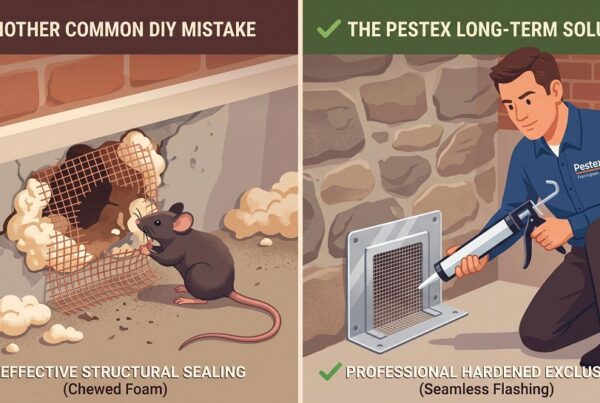
- Rodents: Mice can squeeze through holes the size of a dime, and rats only need a gap the size of a quarter. By plugging foundation cracks with steel wool or copper mesh (which rodents cannot chew through) and sealing utility lines, exclusion physically blocks them from nesting in your walls.
- Insects: Ants, cockroaches, spiders, and stink bugs often enter through microscopic gaps around window frames or torn window screens. Professional caulk jobs and screen repairs stop these creeping invaders dead in their tracks.
- Birds and Bats: Birds love to build nests in unprotected vents, while bats seek refuge in attic soffits. Custom-fitted mesh and structural repairs ensure that the upper echelons of your home remain completely inaccessible to flying pests.
A Proactive, Cost-Effective Solution
Many homeowners rely on traditional pest control methods out of habit, calling for help only when they spot a mouse scurrying across the floor or an ant trail on the counter. While trapping and chemical treatments are sometimes necessary to handle an active infestation, they are ultimately reactive measures.
Investing in professional pest exclusion services is the ultimate proactive strategy. Rather than paying for recurring treatments year after year, exclusion requires a one-time upfront investment that yields permanent results. Over time, the cost savings are substantial. Not only do you save money on continuous pest control visits, but you also protect your home from the costly structural damage and health hazards that pests can cause—such as chewed electrical wires, contaminated insulation, and structural wood damage. Furthermore, exclusion is an environmentally friendly approach that heavily reduces the need for chemical pesticides inside your living space.
Contact Us
Don’t wait for the next seasonal shift to bring a new wave of pests into your home. Secure your property with a permanent barrier today.
At Pestex in Framingham, MA, our expert technicians are highly trained in identifying structural vulnerabilities and implementing top-tier exclusion techniques. We use the highest quality materials to ensure your home remains safe, clean, and pest-free year-round.
Ready to fortify your home? Contact Pestex today to schedule a comprehensive inspection and learn more about our customized exclusion solutions.